

The Quantum Leap: Comparing Pure-Play Stocks vs. Diversified Tech Giants for 2026 Growth

The Quantum Leap: Comparing Pure-Play Stocks vs. Diversified Tech Giants for 2026 Growth

As of February 2026, the quantum computing sector has transcended its “experimental” label to enter a pivotal Utility Phase. For investors, the landscape has split into two distinct paths: the aggressive, high-alpha potential of pure-play hardware companies and the fortified, ecosystem-driven dominance of diversified tech giants.

The global quantum market is projected to reach approximately $2 billion in 2026, fueled by a surge in hybrid quantum-classical deployments in defense, aerospace, and pharmaceutical research. Choosing between these two paths requires a deep understanding of the risk-reward ratio and the technical milestones achieved this year.

The Case for Pure-Plays: High Alpha, High Risk

Pure-play stocks offer the purest exposure to the “Quantum Leap.” These companies are often hardware-centric, battling to establish the industry-standard architecture.

1. IonQ (IONQ): The Scalability Leader

In early 2026, IonQ has emerged as a frontrunner with its Tempo platform, which hit the #AQ 64 …

The Quantum Leap: Comparing Pure-Play Stocks vs. Diversified Tech Giants for 2026 Growth Read More


Safe Harbors: Top-Rated Dividend King Stocks for Portfolio Protection During 2026 Market Volatility

Safe Harbors: Top-Rated Dividend King Stocks for Portfolio Protection During 2026 Market Volatility

As of mid-February 2026, the exuberant “AI-everything” rally that defined the previous two years has met a stark reality. With the Federal Reserve maintaining a “higher-for-longer” stance to combat sticky 2.8% inflation and corporate earnings growth showing signs of late-cycle fatigue, the S&P 500 has entered a period of high-beta turbulence. For the disciplined investor, the objective has shifted from chasing triple-digit growth to establishing a “Beta Buffer”—a defensive posture designed to preserve capital while securing reliable cash flow.

In this environment, Dividend Kings represent the ultimate institutional-grade sanctuary. To earn the title of a Dividend King, a company must have increased its annual dividend payout for at least 50 consecutive years. This elite group has survived the stagflation of the 1970s, the dot-com bubble, the Great Financial Crisis, and a global pandemic. In 2026, these stocks are not just income vehicles; they are the strategic anchors of an …

Safe Harbors: Top-Rated Dividend King Stocks for Portfolio Protection During 2026 Market Volatility Read More
Beyond the Hype: Evaluating AI Monetization and Earnings Growth in Non-Tech S&P 500 Companies

Beyond the Hype: Evaluating AI Monetization and Earnings Growth in Non-Tech S&P 500 Companies

By mid-February 2026, the S&P 500 has officially entered the “Harvest Phase” of the artificial intelligence cycle. For the previous two years, market gains were heavily concentrated in the “Enablers”—the semiconductor giants and cloud hyperscalers providing the picks and shovels. However, the narrative has shifted. Investors are no longer asking who is building AI, but rather: “Who is actually making money from it?”

In a significant “performance handover,” non-tech sectors are now driving the next leg of the S&P 500’s projected 15% earnings growth for 2026. Companies in healthcare, finance, and retail that successfully transitioned from experimental pilots to Agentic AI workflows are seeing tangible margin expansion. This is the era of the “AI Dividend,” where proprietary data meets operational execution.

The 2026 Inflection Point: From Chatbots to Agents

The defining characteristic of 2026 is the rise of Agentic AI. Unlike the generative tools of 2024 that merely predicted …

Beyond the Hype: Evaluating AI Monetization and Earnings Growth in Non-Tech S&P 500 Companies Read More
Best Russell 2000 Small-Cap Stocks to Buy During the 2026 Fed Easing Cycle

Best Russell 2000 Small-Cap Stocks to Buy During the 2026 Fed Easing Cycle

As of mid-February 2026, the financial markets are witnessing what many analysts are calling the “Great Rotation.” After years of mega-cap dominance, the spotlight has shifted toward the underdogs. The Russell 2000 Index surged more than 5% in January alone, outperforming the S&P 500 as investors anticipate the next leg of the Federal Reserve’s easing cycle.

The current Federal Funds Rate sits in the 3.50%–3.75% range. While the Fed held rates steady at its January 28 meeting, the consensus is clear: with inflation expectations well-contained and labor markets cooling but not breaking, at least two more 25-basis-point cuts are projected for H2 2026. For small-cap stocks—which have historically carried more floating-rate debt and higher sensitivity to the cost of capital—this cycle is a “coiled spring” for valuation expansion.

The Small-Cap Inflection Point: Why Now?

The fundamental case for small-caps in 2026 rests on a massive valuation disconnect. While the …

Best Russell 2000 Small-Cap Stocks to Buy During the 2026 Fed Easing Cycle Read More
Investing in Dow Jones Futures

Investing in Dow Jones Futures

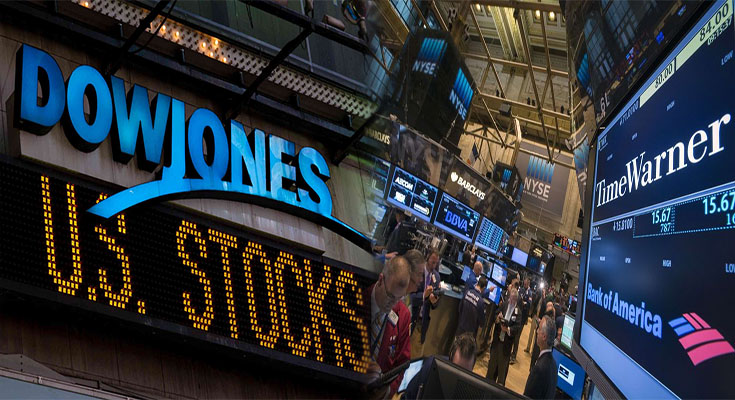
If you’re interested in investing, you may want to consider a Dow Jones futures contract. This type of contract allows investors to hedge against the potential value of an asset, while speculating on its value.

Price limit

Dow Jones futures are derivative contracts based on the value of the Dow Jones Industrial Average (DJIA). They are traded on the Chicago Board of Trade (CBOT).

The DJIA is comprised of 30 companies. The futures contract closely tracks the index value during regular U.S. stock market trading hours.

A Dow Jones futures price limit applies during normal trading hours. However, there are exceptions. For example, when the index has lost 5% of its value, the limit will be triggered. This causes a sudden increase in the value of the index.

When the index goes under a limit, a stop order will be placed on outstanding contracts. In addition, cash settlement will be …

Investing in Dow Jones Futures Read More